
OneCasino Account, Verification and Controls
 Available in US
OneCasino combines a single-person account rule with password and one-time-code access, identity checks linked to payments, and several safer-play controls. Those pieces affect different stages of the customer relationship: signing in is an access check, changing funding details is a payment-ownership question, and a self-imposed limit is a restriction on gambling activity. Treating them as one generic account setting misses material differences in what the operator can review or change.
For money-related matters, OneCasino may seek photo ID, address proof, payment evidence or source-of-funds information. The account also includes limits covering deposits, wagers, net losses and time spent playing. The distinction between these safeguards and reward conditions matters when a person wants to understand a balance, a delay or an interruption of play.
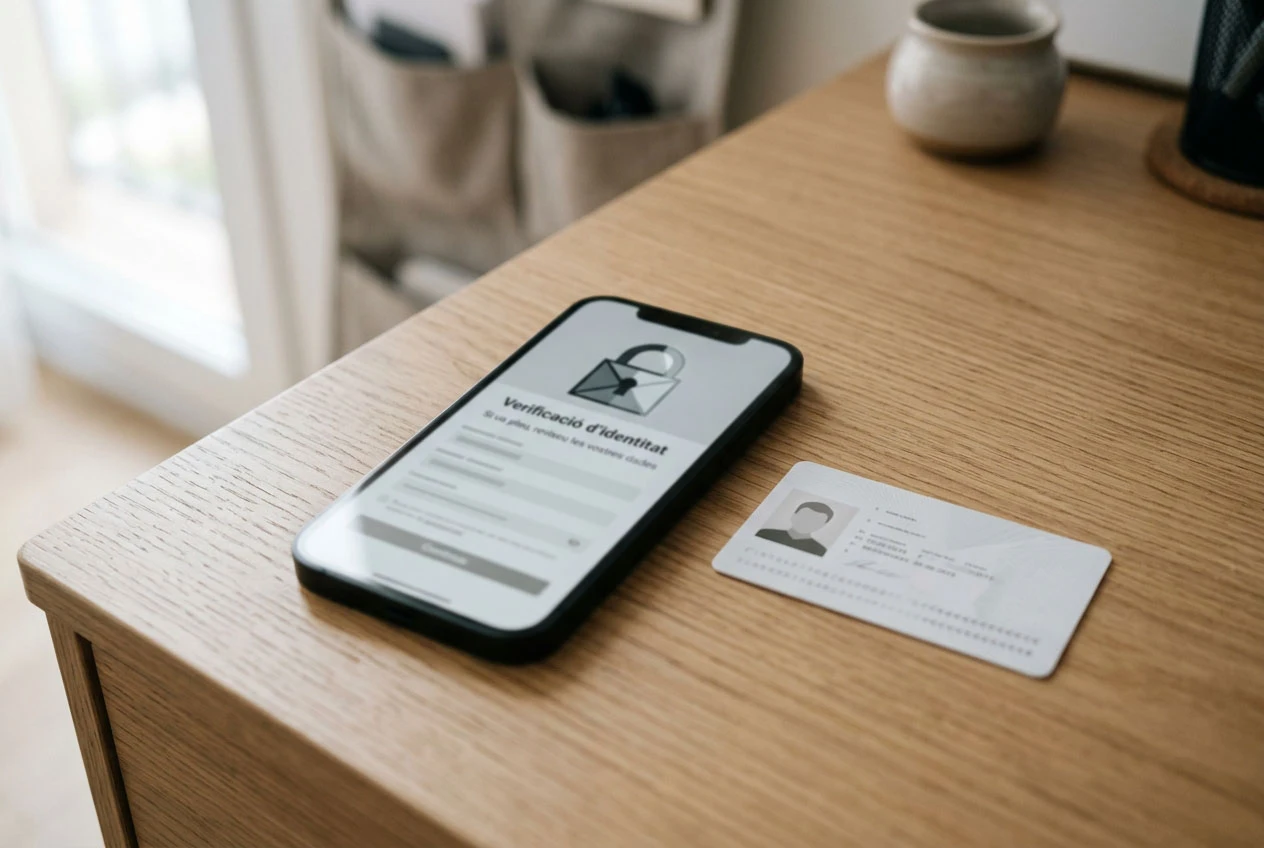
Table of Contents
- The credentials and settings behind an account
- How support handles access and account questions
- Identity checks and payment documentation
- Temporary pauses and permanent self-exclusion
- How deposit, loss, wager and time limits work
- Keeping account access separate from payment authority
- Questions about OneCasino accounts
- Identity checks and play limits shape account use
The credentials and settings behind an account
OneCasino permits one personal account per individual. This is a control over identity, activity and funds, rather than permission to maintain different balances under separate logins. A username and password identify the account, while a code sent by email or SMS can also appear during login. That second step matters because possession of a password alone should not be treated as access to every account operation.
Account details support ordinary login, payment checks and customer-service contact. The username is fixed after creation; password changes are handled within account settings. Changes to certain bank details instead require support. Those differences are important when details associated with a payment no longer match the original account information: editing a visible profile field is not necessarily the same process as changing a destination for funds.
For residents of Canada, CAD support in product terms does not itself establish permission to create an account. The separate licence and access section covers the country restriction issue; this account description concerns the controls and obligations attached to the service.
- One person, one account: prevents parallel identities being treated as separate customer records.
- Username: remains unchanged once assigned.
- Password and login code: distinguish primary credentials from the additional code delivered by email or SMS.
- Payment identity: may require assistance and documentary review rather than a simple profile edit.
The consequence of a single-account rule is that payment instruments, gaming activity and a support history can be examined together. It also means creating a second account is not a normal substitute for resolving an access or verification problem with the existing one.
How support handles access and account questions
OneCasino offers live chat, an online help centre, telephone support at +356 27782188 and email at [email protected]. For formal written complaints, the operator also names [email protected]. These channels serve different practical purposes: live messaging is suited to a current interface issue, whereas email provides a record of a request involving account details, transaction history or a change that needs review.
The operator describes broad support coverage, but live-agent availability is not uniform across the channel descriptions. A visible chat option does not establish when an agent will answer, and an account restriction may therefore need written follow-up even when help articles are accessible.
A clearly framed message should identify the affected account without disclosing a password or one-time login code. A transaction date, method and reference can distinguish an account-security question from a payout-method issue. Sensitive identity materials deserve a controlled document-submission route, not a public review or open discussion thread. These are general precautions relevant to the operator’s payment and identity checks.
The support path also has a recordkeeping dimension. A customer can retain copies of communications and distinguish the initial service request from a formal complaint. More detailed dispute routing is addressed in the licence and complaints explanation; support email alone is not a guarantee about how or when a disputed balance will be resolved.
- Identify whether the issue concerns login, account details, limits or a payment.
- Use a support channel appropriate to the sensitivity of the material involved.
- Keep dates and replies together so subsequent correspondence has a coherent sequence.
Identity checks and payment documentation
Identity verification is part of OneCasino’s account and payment procedures. Its terms permit a request for identity or payment records at the operator’s discretion; deposits or withdrawals exceeding the equivalent of EUR 2,000 can prompt additional examination. That figure is a described review trigger, not a promise that lower activity goes unchecked and not a universal minimum withdrawal amount.
Examples of documents used in that process include photo identification, address evidence such as a utility bill, and materials related to the card, payment account or source of funds. A document can serve more than one purpose: identification checks who holds the account, while proof of payment ownership links an incoming or outgoing payment to that person. Source-of-funds records answer a different question about the origin of the money.
Verification can intersect with cashouts because OneCasino generally sends funds toward the original payment route where possible, and another bank destination can require review. The mechanics of matching methods, cashout stages and differing withdrawal thresholds are explained in the withdrawal checks and payout flow. A customer should not interpret the EUR threshold as a fixed waiting time, an exemption from identity checks or evidence of a completed review.
| Item | What it addresses | Practical implication |
|---|---|---|
| Photo ID | Identity and age | The account holder must match the person being checked. |
| Address record | Residential details | Information in account records may be compared with the document. |
| Payment record | Control of card, wallet or bank route | Payment ownership may affect where funds can be returned. |
| Funds documentation | Origin of money | Separate review from password and contact details. |
It helps to distinguish the operator’s ability to request a document from any claim that every review occurs at an exact amount or at an exact moment. The same person may face account security checks at login, payment verification during a transfer and additional examination during a larger transaction. Those are connected parts of one account record, but they address different risks.
Temporary pauses and permanent self-exclusion
OneCasino’s responsible-gaming controls include temporary self-exclusion and a permanent exclusion route handled through support. Its published temporary periods run from 1 to 30 days. An exclusion is different from reducing a session-time limit: it is intended to interrupt access to gambling activity for the selected period, rather than merely flagging that a preferred session length has been reached.
The distinction matters especially for someone using a short pause in response to repeated losses. A normal time limit still operates within an active playing account; self-exclusion changes the status of participation for a defined period. Permanent exclusion is a separate intervention rather than an unlimited version of an ordinary daily threshold. It is not useful to assume that all types of limits have identical amendment or reactivation rules.
These mechanisms are not a substitute for outside assistance where gambling is causing financial or emotional harm. An account-level limit applies within the operator’s own service. Support from Gambling Therapy can address wider behaviours, distress and financial effects that are not confined to a single login or product. The footer provides a direct link to that free service.
Self-exclusion also differs from having the operator suspend an account for a terms-related reason. A voluntary safer-play restriction originates with a protective intent, while a compliance or account dispute is handled under other account rules. Combining those events into one generic label would obscure what triggered the interruption and which support process relates to it.
How deposit, loss, wager and time limits work
The available controls cover deposits, wagering, net losses and session time. These are not interchangeable measures. A deposit limit focuses on money transferred into an account; a wagering limit is concerned with bets placed, which can exceed an initial deposit through repeated play. A net-loss measure instead tracks a financial outcome, while session time addresses the duration of activity.
OneCasino applies a seven-day cooldown to limit increases or removals. A delay of that kind changes the meaning of a request made during an active session: relaxing a constraint is not the same as an immediate reversal of a restrictive choice. The cooldown also matters when a short-lived urge to continue play conflicts with a previously set boundary.
| Control | Measures | Why it is different |
|---|---|---|
| Deposit | Money paid in | A single deposit can finance multiple rounds of play. |
| Wager | Amount staked in games | Turnover can grow as money is repeatedly wagered. |
| Net loss | Difference between money lost and won | It relates to outcome rather than the volume of bets alone. |
| Session time | Time spent in a playing session | A long session can occur without unusually large deposits. |
For example, equal deposits can produce very different wagering totals depending on how often returned amounts are staked again. This is why one financial control cannot be assumed to replace another. Session restrictions introduce a separate boundary because duration and stake volume are linked to different behaviour patterns.
These options also work differently from bonus wagering requirements. A requirement to turn over promotional credits is a condition attached to the promotion; an account wagering limit is designed to constrain the player’s exposure. One should not be understood as permission to override the other. Where controls and a promotion intersect, the safer-play boundary remains a separate reason to stop gambling.
Keeping account access separate from payment authority
A login begins with the username and password, with an email or SMS code sometimes required as an additional verification step. A code delivered to a contact channel links account access to control of that email inbox or phone. Because it can be used to authorize sensitive actions, the code belongs with the person signing in, not with an unsolicited message, a public forum or someone presenting themselves as an intermediary.
Account recovery and bank-detail changes create different security questions. The operator’s help guidance places password changes in account settings, while its instructions require support for some bank-information changes. A successful login therefore does not imply that every payment destination or identity field may be freely rewritten. This separation is relevant whenever account credentials are compromised or an old payment route can no longer receive a refund.
Likewise, a request for photo identification is not an instruction to share a complete card number, password or authentication code in ordinary chat. The operator’s published financial checks are reasons to use the designated document procedure and to establish which record is necessary. Treating all requests for information as equivalent creates avoidable privacy exposure.
When investigating suspicious activity, a useful distinction is whether the concern is unauthorized access, incorrect personal details or a disputed wager. These issues can involve different records and support channels. The operator’s terms also allow results to be adjusted following technical malfunctions; that contract mechanism is separate from how the holder proves their identity. Keeping these questions apart helps explain an account history without assuming a payment problem is merely a password problem.
Questions about OneCasino accounts
Can a person use two OneCasino accounts?
No. OneCasino’s terms limit an individual to one personal account.
When can OneCasino request identity documents?
OneCasino can request identity or payment records at its discretion and describes additional checks around deposits or withdrawals above the equivalent of EUR 2,000.
What safer-play controls are offered?
Deposit, wagering, net-loss and session-time limits are available, alongside temporary or permanent self-exclusion. Increases or removal of limits carry a seven-day cooldown.
Identity checks and play limits shape account use
OneCasino account use rests on three distinct controls: the credentials used to sign in, the evidence requested to associate payments with a person, and the boundaries that restrict money and time at risk. The single-account rule and change procedures keep personal records linked to one holder; verification can occur beyond a stated transaction threshold; and safer-play limits have their own cooldown and exclusion options.
For practical clarity, a login issue belongs to an authentication channel, a card or bank-destination issue belongs to payment verification, and a limit should be understood as a restriction on exposure rather than as an obstacle to a promotion. Each has a different consequence for funds, access and account history.
Read next
Published by the One-casino-slots.com team.